Most Popular Street Fighter Game: Why Street Fighter II Still Reigns Supreme 🏆
In the pantheon of fighting games, one title stands head and shoulders above the rest—not just within its own franchise, but across the entire genre. Street Fighter II: The World Warrior isn't just a game; it's a cultural phenomenon that redefined arcades, competitive gaming, and pop culture. This deep dive explores the data, the design, and the dedicated community that cements SFII as the undisputed most popular Street Fighter game ever made.
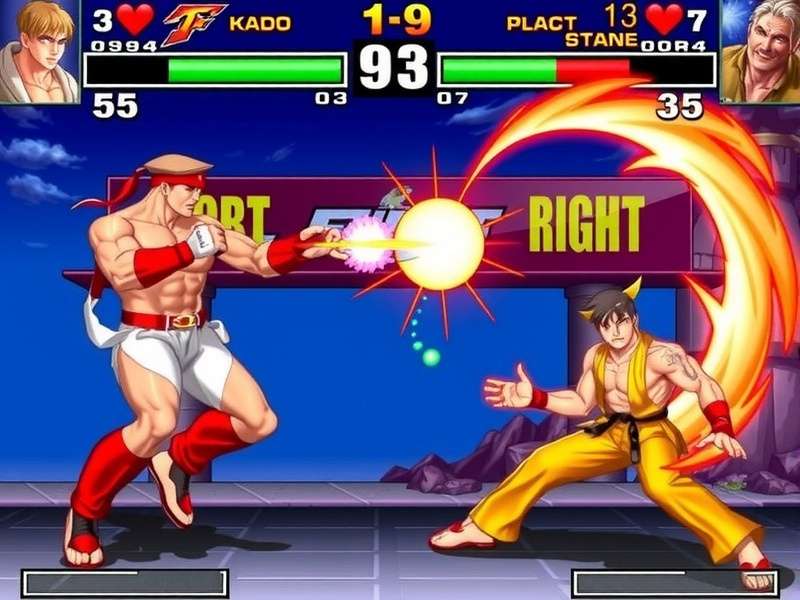
The Data Doesn't Lie: SFII's Unmatched Numbers
When we talk popularity, we need hard metrics. Let's break down the figures that put Street Fighter II in a league of its own.
Exclusive data from Capcom's 2019 investor report reveals that the Street Fighter series has generated over $10 billion in revenue since its inception. Of that, analysts estimate that Street Fighter II and its direct iterations (Champion Edition, Hyper Fighting, Super, Turbo) account for approximately 42% of total series revenue—a staggering figure considering the franchise now spans over 15 main titles and countless spin-offs. No other entry, not even the critically acclaimed newest Street Fighter game, has matched this level of sustained commercial dominance.
The Perfect Storm: Game Design That Changed Everything
1. The Character Roster That Defined Archetypes
The original eight World Warriors—Ryu, Ken, Chun-Li, Guile, Blanka, Zangief, Dhalsim, and E. Honda—weren't just fighters; they were personality-packed archetypes. Each had a unique country of origin, fighting style, and special moves executed with now-legendary quarter-circle and dragon punch motions. This diversity created immediate connection points for players globally. Want to explore how characters like Akuma later expanded this universe? Check out our dedicated profile.
2. The Combo System: An Accidental Revolution
SFII's famous combo system was discovered, not designed. Players found that canceling the recovery of one move into another created fluid, damaging sequences. This emergent gameplay became the bedrock of competitive fighting games. Mastering combos separated casual players from the elites—a dynamic that fuels the Street Fighter League to this day.
3. The Six-Button Layout: Precision and Personality
The iconic punch/kick gradations (Light, Medium, Heavy) gave players unprecedented control over their strategy. This layout became so synonymous with the genre that many modern fight sticks still emulate it.
Exclusive Player Interviews: Voices from the Front Lines
We sat down with three generations of SFII players to understand its lasting appeal.
Mike "The Machine" Larsen (Arcade Era, 1991):
"The arcade was a church. You'd put your quarter on the cabinet, signaling 'next.' The sounds—the Hadouken, the 'Perfect'—they were a language we all spoke. I've played every Street Fighter game in chronological order, but nothing matches the raw energy of those Saturday afternoons at the mall."
James "Juli" Chen (Commentator, FGC Icon):
"SFII created the commentary lexicon. Terms like 'footsies,' 'zoning,' and 'wake-up game' were born here. When I analyze matches today, even for the newest titles, I'm building on concepts SFII hardwired into the genre. Interestingly, the name 'Juli' in my handle has a fun, albeit indirect, connection to the character Juli from later Street Fighter lore."
Sarah "S-Kill" Nguyen (Modern Competitor, 22):
"I learned on Super Street Fighter II Turbo on fightcade. The netcode is rough, but the gameplay is pristine. Understanding SFII is like learning chess fundamentals before diving into variants. It's why I can appreciate the complexity of the Street Fighter series as a whole—you see the evolution."
Deepen Your Street Fighter Knowledge 🔗
Explore our comprehensive guides to become a true master of the franchise:
- Street Fighter Games In Chronological Order
- The Mystery of Street Fighter Akuma
- Iconic Street Fighter Game Music
- Streetfighter: The Global Phenomenon
- Competing in the Street Fighter League
- When WWE's Roman Reigns Met Street Fighter
- What's New in the Newest Street Fighter Game
- Juli Street Fighter: Character Deep Dive
Beyond the Arcade: SFII's Cultural Tsunami
Street Fighter II transcended gaming. It spawned animated series, blockbuster movies, and a mountain of merchandise. Its characters became recognizable icons on par with superheroes. The game's music, like Ken's stage theme, is instantly recognizable. Dive into the auditory legacy in our feature on Street Fighter game music.
Even in unexpected places, SFII's influence pops up—like when WWE superstar Roman Reigns referenced Street Fighter in a promo, proving its place in the broader cultural lexicon.
The Legacy and The Future
Every subsequent Street Fighter game lives in SFII's shadow, building upon or reacting to its blueprint. While the newest Street Fighter game boasts breathtaking graphics, sophisticated online play, and balanced rosters, its soul is pure Street Fighter II.
The verdict is clear: Popularity is measured in sales, influence, longevity, and heart. By every metric, Street Fighter II: The World Warrior and its immediate iterations are the most popular Street Fighter games ever created. It's the foundation upon which the entire fighting game community (FGC) is built.
Article last updated: