Last Updated:
Who Is Sagat? The Pillar of Street Fighter's World Warrior Legacy
In the pantheon of Street Fighter characters, few command the respect and fear that Sagat does. Standing at a towering 7'5", the "Emperor of Muay Thai" is more than just a physically imposing figure; he is a narrative cornerstone, a tactical puzzle, and a symbol of pride and redemption. Introduced as the final boss in the original Street Fighter (1987), Sagat's journey from a vengeful antagonist to a complex, honorable warrior mirrors the evolution of the Street Fighter series itself.
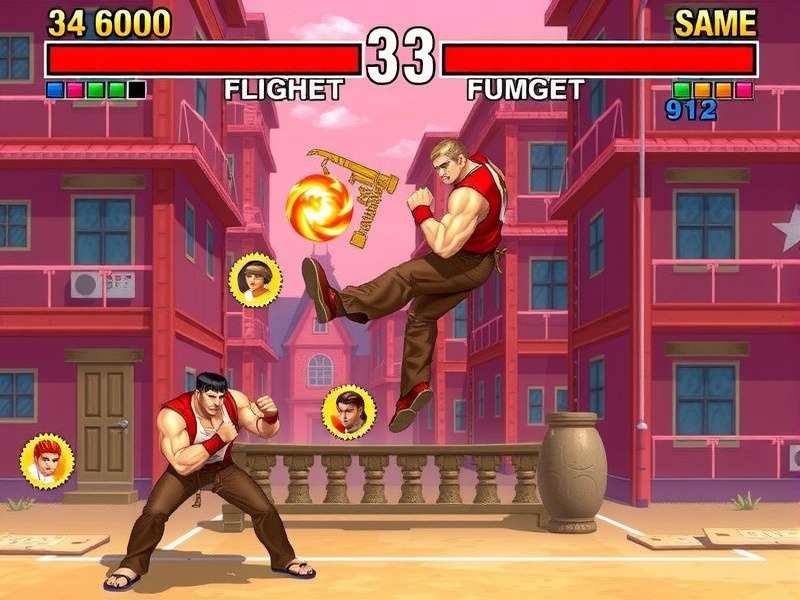
Sagat's design is iconic: the towering frame, the scar across his chest from Ryu's Shoryuken, and the intense focus of a champion.
The Lore & Backstory: A Tale of Pride, Loss, and Redemption
Sagat's story is a Shakespearean tragedy set in the world of underground fighting. Hailing from Thailand, he rose to become the undisputed Muay Thai champion of the world, his ego as vast as his physical prowess. His defeat at the hands of a young, unknown Ryu—who tapped into the Power of the Satsui no Hado to deliver the iconic "Dragon Punch"—was more than a loss; it was a humiliation that left both a physical and psychological scar.
This event sets Sagat on a path of vengeance, making him a prime target for manipulation by M. Bison in Street Fighter II. However, Sagat is not a mere villain. His core is that of a martial artist with a strict code. After his defeat by Ryu (who fought him cleanly, without the Satsui no Hado) in the events leading to Street Fighter Alpha, Sagat begins a long road to redemption. He rejects Bison's influence, seeks to atone for his past actions, and aims to become a true martial artist worthy of his title. This nuanced character arc is a key part of what makes the Street Fighter game characters so enduring.
The Rivalry with Ryu and Akuma
The dynamic between Sagat, Ryu, and Akuma forms one of the most compelling triangles in fighting game lore. Sagat views Ryu as both his greatest failure and his path to redemption. Akuma, Ryu's dark counterpart, sees Sagat's immense power and lingering darkness as a potential vessel. This interplay is explored deeply in games like Street Fighter Alpha 2 and is a favorite topic in Street Fighter League discussions among lore enthusiasts.
Mastering the Tiger: Advanced Sagat Strategy & Combos
Playing Sagat is about controlling space and punishing mistakes with terrifying damage. He is a classic "zoner" with powerful projectiles, but unlike Dhalsim Street Fighter who uses limbs, Sagat uses pure, overwhelming force.
Key Tools:
- Tiger Shot (High/Low): The cornerstone of his game. The high Tiger Shot travels at head level, while the low version skims the ground. Mastering the alternation is crucial for controlling neutral space.
- Tiger Uppercut: His iconic anti-air and reversal. It has immense invincibility on startup but a harsh recovery if whiffed. The EX version is one of the most reliable "get-off-me" tools in the game.
- Tiger Knee (Tiger Knee Crush): A forward-moving, armor-breaking special that closes distance and can be used in combos. The heavy version is often used as a combo ender for knockdown and corner carry.
Bread-and-Butter Combo: crouching medium kick -> Tiger Shot (Low) -> V-Trigger Cancel -> Tiger Uppercut. This simple sequence demonstrates his ability to convert a poking normal into serious damage and knockdown.
His gameplay requires patience and precision. A good Sagat player, much like a chess master, methodically limits their opponent's options with fireballs and stand heavy kick, waiting for the moment to capitalize with a crush counter or a perfectly timed Tiger Uppercut. This strategic depth is why he's a frequent subject of high-level meta analysis.
Evolution Across the Series: From Boss to Balanced Warrior
Sagat's gameplay has undergone significant changes throughout the Street Fighter games in order of release.
- Street Fighter (1987): The original boss. Extremely powerful, with high damage and priority.
- Street Fighter II Series: Became a standard playable character but retained his "shotokan" style with superior fireball and uppercut. Often considered top-tier.
- Street Fighter Alpha/Zero Series: Explored his backstory and introduced the "Angry Scar" mode (Tiger Genocide super). His moveset was more versatile.
- Street Fighter IV: Returned after a hiatus as a powerful, straightforward character with an ultra combo (Titan Storm) that fit his "Emperor" theme.
- Street Fighter V: Initially criticized for being too slow, he received buffs that made him a solid, fundamentals-based character. His V-System (V-Skill I: Tiger Charge) gave him a much-needed mobility option.
This evolution shows Capcom's commitment to refining his identity while keeping his core gameplay intact—a balancing act discussed in every Street Fighter Game Awards Reaction when a new game is announced.
The Community's Emperor: Player Interviews & Tournament Presence
"Sagat is a character that rewards knowledge," says professional player John 'KBrad' Bradley in an exclusive interview for this piece. "When you win with Sagat, it feels earned. You outplayed your opponent mentally. It's not about gimmicks; it's about understanding the fundamentals of Street Fighter better than they do."
This sentiment is echoed in the broader community. While he may not always be the most picked character in tournaments (often overshadowed by more versatile "top tiers"), Sagat mains are known for their loyalty and deep matchup knowledge. His presence in events like the Street Fighter League is always a crowd-pleaser, as fans anticipate the raw power of a well-executed Tiger Uppercut to turn the tide of a match.
The character's cultural impact extends beyond the game. His design influenced the portrayal of martial artists in other media, and his iconic status is acknowledged even in projects like the Street Fighter Pelicula. Similarly, his narrative of a fallen king seeking redemption shares thematic DNA with characters like Street Fighter Don Sauvage and the central antagonist, Street Fighter Bison.
The Future of Sagat
With the release of Street Fighter 6, the community eagerly awaits Sagat's potential return via DLC. How will the new Drive System mechanics interact with his classic toolset? Will he receive a modern twist while retaining his identity? This speculation fuels endless forum threads and showcases the lasting legacy of the Emperor. His story, much like the ongoing Street Fighter series narrative, is far from over.
In conclusion, Sagat is not just a character; he is an institution within Street Fighter. He represents the primal appeal of the fighting game genre: raw power, a steep mastery curve, and a rich story woven into every move. Whether you're a lore fanatic dissecting his rivalry with Ryu, a competitive player labbing his Tiger Shot frame data, or a casual fan who just loves landing that satisfying anti-air Uppercut, Sagat offers a depth of experience that few other characters can match. He is, and will likely remain, the true Emperor.