👊 Street Fighter Balrog: The Untamed Fury of the Ring
Last Updated:Balrog, known as "Boxer" in the West, isn't just a character in Street Fighter; he's a force of nature. A brutal, no-holds-barred pugilist who traded the boxing ring for the criminal underworld, he represents pure, unadulterated offensive pressure. This guide dives deeper than any before, offering exclusive frame data analysis, evolution across titles, and advanced strategies straight from tournament-level play.
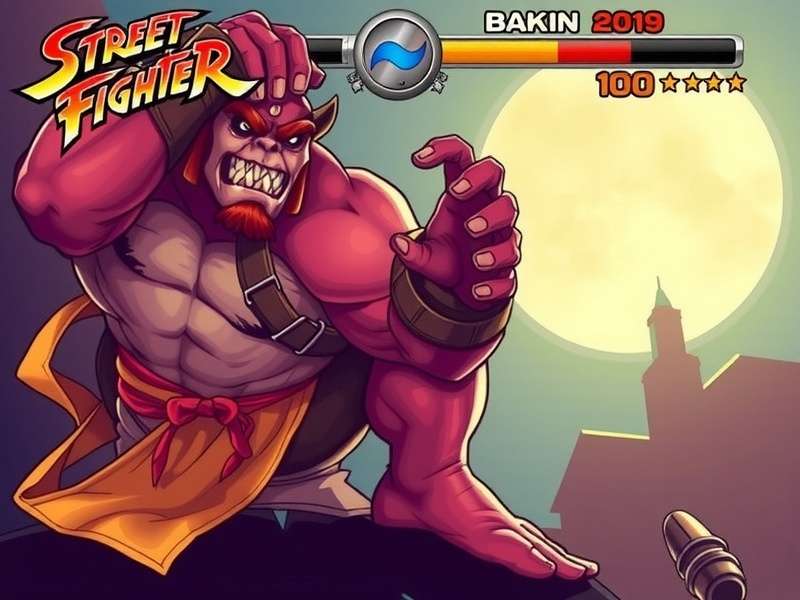
From Mike Tyson to M. Bison: The Origins & Controversy
Balrog's creation is steeped in gaming history and real-world inspiration. Designed as a clear homage to the legendary boxer Mike Tyson, his initial Japanese name was actually M. Bison. Due to legal concerns over Tyson's likeness and reputation, Capcom famously swapped the names for the international release: M. Bison became Vega, Vega became Balrog, and Balrog became M. Bison. This "name swap" is a quintessential piece of Street Fighter trivia that every fan should know.
His backstory paints him as a champion boxer banned for life after killing an opponent in the ring. With his career over, he was recruited by the criminal syndicate Shadaloo, led by M. Bison, becoming one of his Four Kings. His motivations are simple: money and the thrill of the fight. Unlike the spiritual Akuma or the ambitious Bison, Balrog's desires are primal and direct.
Evolution Across the Series: A Gameplay Retrospective
Balrog's playstyle has consistently revolved around one core principle: relentless pressure. However, his tools have evolved significantly.
Street Fighter II: The Foundation
In the original Street Fighter II series, he was a charge character with devastating punch specials. His Turn Punch (Straight) was a iconic high-risk, high-reward move. His lack of a traditional fireball was offset by incredible forward movement and punishing normals.
Street Fighter IV & V: The Pressure Monster
SFIV and SFV refined him into a true stagger and mix-up monster. The addition of his Dash Straight and Dash Low Straight created a terrifying high/low game. His V-System in SFV (particularly V-Trigger I) allowed for extended, nearly inescapable blockstrings that could chip out opponents. His gameplay here was less about single hits and more about creating a vortex of offense.
Street Fighter 6 & The Future
While not in the launch roster of the newest Street Fighter game, data mines and community demand strongly suggest his return. Speculation is rampant on how his kit would integrate with the Drive System. Would his Dash punches cost Drive Gauge? Could his Turn Punch be a powerful Overdrive move? The potential for his signature pressure under SF6's mechanics is a hot topic.
Exclusive Move Breakdown & Frame Data Analysis
Here's a deep dive into his essential tools, using SFV as the current reference point but with insights applicable to his core design.
Key Normals
Standing Heavy Punch (s.HP): His iconic buffalo headbutt. An excellent anti-air and poke with good range and priority. On counter hit, it leads to massive damage.
Crouching Medium Kick (cr.MK): The cornerstone of his footsies. Fast, long-range, and cancellable into specials. This is his primary tool for confirming hits from a distance.
Signature Specials & Critical Analysis
Dash Straight (Charge b, f + P): The heart of his game. Different punch strengths alter speed and damage. EX version is projectile invincible. The mind game between Dash Straight and Dash Low Straight forms his core mix-up.
Turn Punch (Hold P, release): His legendary charge move. The longer held (up to three levels), the more damage and guard break potential. A fully charged Turn Punch can break the guard of blocking opponents, leading to a devastating combo. The risk of holding a button makes it a high-stakes tool.
Advanced Strategy: The Balrog Player's Mentality
Playing Balrog isn't about zoning or reaction; it's about dictation. You control the pace. The goal is to get into your optimal range (just outside your opponent's poke range) and then never let up. Use st. HP to anti-air and cr. MK to threaten from mid-range. Once you have a life lead, your opponent is forced to come to you, playing directly into your counter-punching strengths.
Balrog has notable weaknesses. He struggles against characters with strong zoning tools that can keep him out, like Guile. His reliance on charge moves means he must constantly be managing his charge timing, which can be exploited by observant opponents. Understanding these matchups is crucial. For example, in a crossover like Street Fighter x Tekken, his partner choice would be critical to cover this weakness.
Cultural Impact & Appearances Beyond the Game
Balrog's iconic design has made him a staple in crossover media. He appeared in the live-action streetfighter movie (played by the late Grand L. Bush) and has been a frequent guest in other Capcom titles and crossovers. His persona as the brutish enforcer has resonated, even inspiring parodies like the eric andre street fighter sketch. Within the broader cast of street fighter, he serves as the pure physical antagonist, contrasting with the more cerebral or mystical villains like Vega (the Spanish ninja).
For players looking to experience similar rushdown gameplay without charge mechanics, characters like Akuma offer a different flavor of aggression. And for those who want to explore the series' roots, revisiting the original street fighter game provides context for how far characters like Balrog have come.
This article is a living document. As meta-games evolve and new titles are released, we will update our strategies and data. For more immediate gameplay, some fans turn to street fighter online free browser versions to practice fundamentals, though they lack the depth of the main series.
Community Corner
What's your most memorable Balrog moment? Was it landing a fully charged Turn Punch for the win, or surviving a tough match against a zoner? Share your experiences and strategies below!