Street Fighter is not merely a video game franchise; it is the foundation upon which the entire fighting game community (FGC) was built. From the revolutionary six-button layout to the nail-biting tension of a perfectly executed combo, Street Fighter gameplay offers an unmatched cocktail of reaction speed, memory, and psychological warfare. This guide distills decades of collective wisdom into a single, comprehensive resource. Whether you're a newcomer trying to throw your first Hadouken or a seasoned competitor studying frame-perfect links, you've arrived at the right place.
If you haven't experienced the classic roots yet, check out the Original Street Fighter Game to see where it all started. And for those ready to step onto the modern battlefield, our Free Street Fighter Game Download page offers safe and legal options.
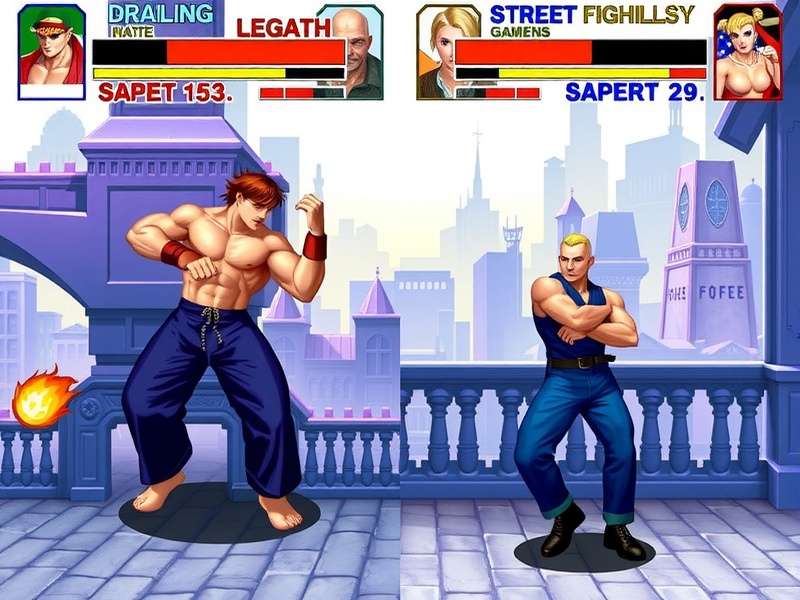
The Evolution of Street Fighter Gameplay
Tracing the lineage of Street Fighter is essential to understanding its current depth. What started as an arcade novelty in the late 1980s evolved into a genre-defining phenomenon. Each major iteration preserved the core DNA while introducing mechanics that reset the competitive landscape.
From Arcade Roots to Modern Mastery
The original 1987 Street Fighter introduced the world to the concept of six buttons — three punches and three kicks. This wasn't just an input choice; it was a philosophical declaration that fighting games deserved the same depth as chess. The sequel, Street Fighter II (1991), exploded into popular culture, and its impact cannot be overstated. The very notion of "special moves" performed via command inputs like quarter-circles and charge motions became the industry standard and are still the core vocabulary of every fighting game released today.
For a deeper look at the classics, you won't want to miss the Street Fighter Game Download Old Version page, where you can revisit these vintage gems.
The Six-Button Layout Revolution
Modern fighting game controllers owe everything to Street Fighter's layout. The arrangement of Weak Punch, Medium Punch, Strong Punch, Weak Kick, Medium Kick, Strong Kick met with skepticism from arcade operators initially — it was expensive to add more buttons to cabinets. Yet, Capcom's insistence on this layout fundamentally reshaped how players think about combat. Light attacks for pokes, mediums for whiff punishing, and heavies for damage; the economy of button choice now defines every exchange in Street Fighter gameplay.
Special Moves and Input Commands
Special moves in Street Fighter are tied to elegant input patterns:
- Quarter-Circle Forward (QCF) → down, down-forward, forward + Punch for Hadouken.
- Dragon Punch (DP / Shoryuken) → forward, down, down-forward + Punch for an anti-air uppercut.
- Charge Motions → hold back for about 1 second, then forward + Kick for Sonic Boom.
- Double Quarter-Circle → QCF twice + Heavy Punch for a Super / Critical Art.
These commands are deliberately directional so that players are forced into positional decisions — the input itself echoes the tactical intent.
Core Combat Mechanics Explained
Street Fighter gameplay operates on a beautiful, layered system. You can enter a match and just throw punches, but to truly understand it, we must unpack the systems underneath the surface.
Health Bars and Rounds
Standard matches are best of three rounds, with a 99-second timer in most titles. The winning condition could not be simpler: reduce your opponent's health bar to zero before time expires, or earn the "time over" victory by having proportionally more health. This simple framing creates depth through risk management — a player with a life lead plays differently than one who is behind.
EX Gauge and V-System / Drive System
Depending on the title, you'll build resources as you attack and take damage. In Street Fighter V, the V-System (V-Skills, V-Triggers, V-Reversals) added metered tactical options. In Street Fighter 6, the revamped Drive System captures the same strategic layer:
Normal Moves vs. Special Moves
Normals are your pokes, your anti-airs, your frame traps. Specials are your combo finishers, your reversal tools, and your resources. Great Street Fighter players understand the character and matchup-specific normal priority — which buttons beat others in neutral footsies.
Throws and Grapples
Throws are the mid-screen equalizer. They beat blocking and keep opponents honest. In modern titles an input of forward + Heavy Punch/Kick is the universal throw, while command throws for grapplers require dedicated directional inputs. Throws can be teched if you read them, creating a continuous rock-paper-scissors layer.
Deep Dive into Advanced Techniques
Once you graduate from basic special moves, a whole new dimension opens. Advanced Street Fighter gameplay is about efficiency, precision, and mind games.
Frame Data Understanding
"Frame data" sounds intimidating, but it's essential. Every move has startup, active, and recovery frames, plus on-block and on-hit advantages. The table below outlines typical values for a character like Ryu:
| Move | Startup | Active | Recovery | On Block | On Hit |
|---|---|---|---|---|---|
| Standing Light Punch | 4f | 2f | 5f | +2 | +5 |
| Crouching Medium Kick | 7f | 3f | 11f | ±0 | +4 |
| Hadouken (Heavy) | 10f | 4f | 20f | +2 | +5 |
| Shoryuken (Heavy) | 5f | 12f | 23f | −12 | KD |
Negative on-block means you're at a disadvantage — the opponent can press buttons first. Positive means the world is yours. This calculation drives every decision at high-level play.
Combos and Cancel Windows
Basic combos chain normal into special; advanced combos use links (normals chain after a set recovery), cancels (special input overrides the recovery), and juggle (opponent is airborne). Understanding the frame windows is what turns a cluster of inputs into an art form.
Footsies and Spacing
The invisible game. The distance at which you "fish" for pokes with long-ranged normals. Walk in, walk out, try to call out a whiff and punish. It is the essence of neutral play — a player with superior footsies makes their opponent 'whiff' first and then does 40% damage in a single punish.
Mixups and Mind Games
When you're plus on block, you can pressure. Throw, strike, shimmy, or block — the mixup system keeps opponents guessing. The best players layer these at multiple timescales: a round of pressure at round start; a string of throws early to bait a late whiff attempt; the mental stack becomes the true battleground.
Character Roster and Playstyles
The Street Fighter universe boasts an iconic cast. Every archetype is represented. Whether you're a beginner or a veteran, there is a character that matches your personality. The Street Fighter Game Characters With Pictures page features an interactive database of every officially released character.
Shoto Clones: Ryu and Ken
Ryu is the "all-rounder" — a fireball/uppercut/dashing toolkit with no glaring weakness. Ken, originally a clone, diverges into a more aggressive rushdown playstyle. Both teach fundamentals, making them perfect starter characters.
Grapplers: Zangief and R. Mika
Grapplers impose their will through sheer presence. Their close-range power is devastating; Zangief's Spinning Piledriver remains the gold standard for command grabs. Players must use good coverage to get in, but once inside, it's a world of pain.
Charge Characters: Guile and Bison
Charge characters reward patient, defensive play. Holding back and then flicking forward produces lightning-fast Sonic Booms. The best charge players in the world make the opponent commit to everything — and then punish with methodical precision.
Rushdown Characters: Cammy and Juri
Speed and pressure. Cammy's approach options are relentless; she engineers a chaotic tempo in which opponents cannot breathe. Juri's store mechanic adds even more complex layers. If you enjoy relentless offense, this is your lane.
Street Fighter Competition and Esports
Street Fighter is the face of the global fighting game community. Tournaments are made of equal parts passion, drama, and mind-blowing skill. The Street Fighter League is the premier team competition that showcases the very best in Street Fighter gameplay at weekly level.
The Evolution of the FGC
In the 1990s, arcade communities gathered around cabinets with ashtrays and coins. Today, the same adrenaline exists on Twitch and YouTube, but the community's heartbeat has grown into a global phenomenon. Major tournaments like EVO and Capcom Cup attract audiences of millions.
Capcom Cup and the CPT
The Capcom Pro Tour (CPT) is a global series of events where players accumulate points; the top 25 qualify for the Capcom Cup — a single-elimination grand stage with a massive prize pool. The dramatic upsets of previous years — Daigo's legendary parry, Justin Wong's 15-0 run — have become esports folklore.
Notable Moments in Street Fighter History
If you are new, search for "Daigo vs Justin Wong EVO 2004" — one of the most iconic rallies in gaming. When Daigo parried a perfectly executed string from Wong, the crowd's roar at that moment signaled the mainstream arrival of competitive fighting games.
Platform Comparison for Street Fighter
Street Fighter games are available across every conceivable platform. Your choice of hardware affects input latency, online quality, and the community you play with.
PC Gaming Experience
PC has become the premier competitive platform thanks to high refresh rates (144Hz/240Hz), low input latency, and excellent wired connections. If you're planning a PC rig, follow the Street Fighter Game Download For Pc Windows 10 guide for step-by-step installation advice.
Console Versions
PlayStation has historically been the tournament standard. Sony's involvement in Capcom's tournaments has kept the console version center stage. Xbox and Switch versions offer cross-play in newer titles, but consistency matters for competitive practice. The Street Fighter Game Download Old Version page offers details for retro hardware fans.
Mobile and Casual Versions
Capcom has released numerous mobile titles for on-the-go training. While touchscreen controls aren't for purists, these versions function as excellent tools for learning character moves and routes when you don't have your main hardware handy. See the Best Street Fighter Game Android for our curated list of the top-end Android experiences.
Improving Your Gameplay
Every Street Fighter player, no matter how experienced, can refine their skills. Here is a practical plan for sustained improvement.
Training Mode Drills That Work
- Anti-Air Trials: Set the dummy to jump-in and practice your upper-cuts/AA normals for 10 minutes.
- Hit Confirm Practice: Record micro-walk, whiff-punish sequences and train the correct punish response for both block and hit.
- Defense Simulator: Program the dummy with blockstring mixups; practice your throw tech and reversal timing.
Watching and Analyzing Replays
Replay analysis is your best friend. Review every loss; locate the exact moments when you (a) lost positioning, (b) ate a punishable whiff, and (c) guessed wrong in mental stack. Write those patterns down in a notepad, then practice the targeted fix in the next session.
Community Resources
Join your local Discord, watch high-level sets from your chosen character's best players, and ask for feedback after your matches. The FGC is famously welcoming. You can also practice online free via the Street Fighter Games Online Free Play hub.
The Future of Street Fighter
Capcom's sustained success with Street Fighter 6, expansion packs, and a thriving tournament circuit indicates a healthy and evolving franchise. Fan theories abound about season passes, new characters, and potential mechanics changes. If the leaked roadmap is any indication, the best is yet to come.
We also can't forget the franchise's forays into other entertainment media, including the Street Fighter The Movie and the Streetfighter Movie. While these films haven't achieved the same critical acclaim as the games, they are an interesting part of the larger multimodality of the brand.
Frequently Asked Questions
What is the best Street Fighter game to start with?
Street Fighter 6 is the most beginner-friendly mainstream entry, thanks to its Modern controls and robust tutorial. That said, the classic Original Street Fighter Game offers a purist but harsh experience. For the best balance of tutorials and depth, pick up SF6 with a character like Luke or Ryu.
How do I execute special moves consistently?
Practice in training mode with input display on. The trick is to be deliberate with the magnitude of your stick movements — no need to overspin — and ensure you make the final button press after the directional input, not simultaneously.
How long does it take to get good?
That depends on your definition of "good." In 3-6 months of regular practice (a few hours a week), you can compete at your local arcade or online at Gold rank. The real grind is years, but the fun comes from the journey.
Is online play viable for practice?
Absolutely. Use well-formed online matches on a wired connection. Your goal isn't just to win; it's to lab what you've learned in training mode. Online play is the perfect "live playbook" environment.
How do I get better at footsies?
Footsies are the dance of micro-positioning. Focus on your opponent's habits — do they throw fireballs after a knockdown? Do they approach with jump-ins? Your anti-air is your best weapon in footsies.
User Interactions & Feedback
We value your insights! Share your thoughts, question, or favorite character strategies with the community.