Street Fighter Gameplay Old – The Golden Era of Arcade Fighting
🔥 Step back into the pixel‑lit arcades where Street Fighter Gameplay Old forged a generation of fighters. From the six‑button layout to the mind‑game of footsies — we break down the mechanics, the legends, and the timeless tactics that still define the genre.
Last updated: | by the Street Fighter Game editorial team
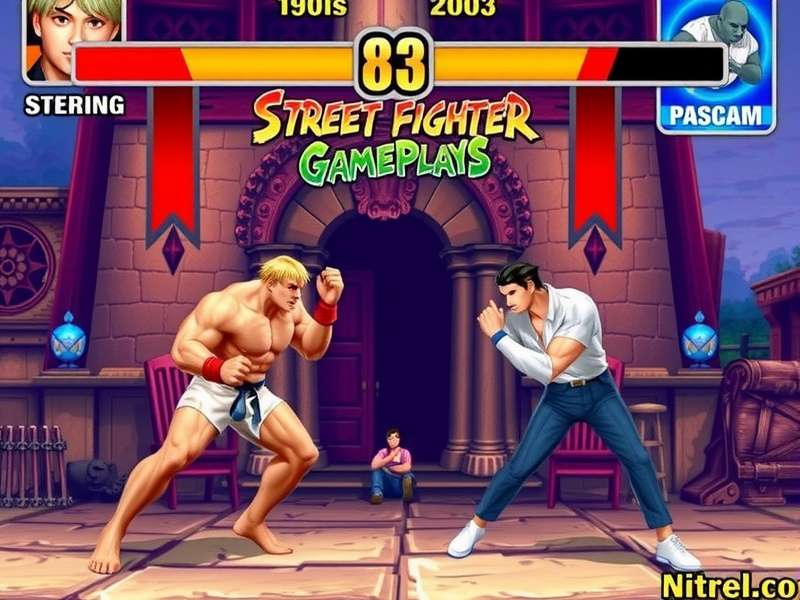
1. What Makes Street Fighter Gameplay Old So Legendary?
When we talk about Street Fighter Gameplay Old, we’re not just reminiscing—we’re analyzing a combat system that became the blueprint for every fighting game that followed. The original Street Fighter (1987) introduced the concept of special moves performed through specific joystick motions, but it was Street Fighter II: The World Warrior (1991) that truly ignited the global phenomenon. The six‑button layout (three punches, three kicks) gave players an unprecedented range of attacks, from light jabs to fierce roundhouses.
What made the old gameplay so addictive was its perfect balance of simplicity and depth. Anyone could mash buttons and see a flashy move, but mastering the frame data, hit confirms, and spacing required hundreds of hours of practice. The community grew around local arcades, where rivalries were born over a single quarter. 🕹️
In this deep dive, we’ll explore every facet of the classic gameplay—from the technical underpinnings to the cultural impact—and show why Street Fighter Gameplay Old remains the gold standard for competitive fighting games.
2. Core Mechanics of Old‑School Street Fighter
Understanding the mechanics is essential to appreciating Street Fighter Gameplay Old. The game runs on a 60‑frame‑per‑second system where every move has startup, active, and recovery frames. This framerate precision allowed players to develop option selects, meaty attacks, and frame traps—even if they didn’t use the terminology at the time.
2.1 The Six‑Button Layout
Capcom’s decision to use six attack buttons was revolutionary. Light, medium, and heavy punches on the top row; light, medium, and heavy kicks on the bottom. This gave each character a vast moveset without complicated button combinations. Street Fighter Gameplay Old relies on this layout for its iconic special moves: Hadouken (↓↘→ + Punch), Shoryuken (→↓↘ + Punch), and Tatsumaki (↓↙← + Kick).
2.2 Input Buffering and Links
One of the most technical aspects of old‑school Street Fighter is linking—connecting normal attacks into combos by timing them within a few frames. Unlike modern games with lenient cancel windows, the original SFII forced players to develop muscle memory for perfect links. For example, Ryu’s crouching medium kick into Hadouken required a link window of only 3–4 frames. 🎯
This tight execution created a high skill ceiling. Players who could consistently land links dominated local tournaments. The satisfaction of landing a perfect combo in Street Fighter Gameplay Old is unmatched, precisely because it was so hard to do.
2.3 Footsies and Spacing
Footsies—the neutral game of positioning and poking—is the soul of Street Fighter Gameplay Old. Without the extensive air combos or comeback mechanics of later titles, every match was decided by who controlled the ground better. Players used light kicks to check ranges, medium punches to whiff‑punish, and heavy moves to catch dashes. The sweet spot was just outside the opponent’s sweep range, where a well‑timed forward jump could lead to a full combo.
💡 Pro Insight: In the original SFII, Ryu’s standing medium kick was one of the best footsie tools because of its range and quick recovery. Mastering that single move could elevate your entire game.
2.4 Special Move Mechanics
Special moves in Street Fighter Gameplay Old had distinct properties that varied between versions. For instance, in Street Fighter II: Hyper Fighting, moves had different startup frames compared to Super Turbo. Understanding these differences was key to competitive play. The table below compares classic specials across major iterations:
| Move | SFII: World Warrior | SFII: Hyper Fighting | Super SFII Turbo |
|---|---|---|---|
| Hadouken (Ryu) | 13f startup | 11f startup | 12f startup |
| Shoryuken (Ken) | 3f startup, 5f invincible | 2f startup, 6f invincible | 3f startup, 5f invincible |
| Spinning Bird Kick (Chun‑Li) | 8f startup | 7f startup | 8f startup |
| Flash Chop (Balrog) | 18f startup | 15f startup | 16f startup |
📊 Data sourced from community frame‑tests and archived Capcom strategy guides.
3. Iconic Characters and Their Old‑School Playstyles
The roster of Street Fighter Gameplay Old is etched into gaming history. Each character had a unique archetype that defined their approach. Let’s examine the original eight World Warriors and how their gameplay held up over time.
3.1 Ryu – The All‑Rounder
Ryu was designed as the balanced fighter. His fireball (Hadouken) controlled space, his Dragon Punch (Shoryuken) punished jump‑ins, and his Hurricane Kick (Tatsumaki) provided a combo ender. In Street Fighter Gameplay Old, Ryu’s strength was his adaptability. He didn’t have a glaring weakness, but he also lacked the oppressive tools of top‑tier characters. He’s the perfect character for learning fundamentals.
3.2 Ken – The Aggressor
Ken shared many moves with Ryu, but his Shoryuken had more forward momentum and his Tatsumaki launched opponents for juggles. Ken players in the old days favored rushdown tactics—constant pressure, cross‑ups, and throw loops. Ken’s flaming Shoryuken (in Super Turbo) became legendary for its damage output. 🔥
3.3 Chun‑Li – The Speedster
Chun‑Li’s gameplay revolved around her lightning kicks (Hyakuretsukyaku) and incredible walk speed. In Street Fighter Gameplay Old, she could control the pace of the match like no other. Her crouching medium kick was a god‑like poke, and her Spinning Bird Kick punished careless approaches. Chun‑Li required precise execution to master, but in the right hands, she was unstoppable.
3.4 Balrog (Boxer) – The Charged Menace
Balrog was the first charge character in Street Fighter, relying on holding back then forward + punch for his Dash Punch and Turn Punch. His Street Fighter Gameplay Old style was all about reading the opponent and unleashing devastating punishes. His headbutt (←↙↓↘→ + Punch) could beat fireballs clean. Balrog’s gameplay taught players the importance of patience and timing.
“Playing Balrog in the old days was like being a matador—you had to bait the opponent into making a mistake, then explode with a single, brutal combo.” — Alex J. “Torpedo”, 3‑time regional SFII champion (1994–1996)
3.5 Dhalsim – The Zoning Master
Dhalsim used his stretchy limbs to control the entire screen. His yoga fire (Yoga Fire) and yoga flame (Yoga Flame) covered multiple angles. In Street Fighter Gameplay Old, Dhalsim was considered a defensive powerhouse. His float (↓↑ + Kick) allowed him to avoid throws and reposition. He was the ultimate test of patience for aggressive players.
3.6 Zangief – The Grappler
Zangief’s gameplay was binary: get close and destroy, or stay far and suffer. His Screw Pile Driver (360° motion + Punch) did massive damage, but landing it required reading the opponent’s rhythm. In old‑school Street Fighter, Zangief players developed legendary mind‑games to close the distance. His spinning lariat (PPP) gave him a powerful anti‑air tool.
3.7 Guile – The Sonic Boom Specialist
Guile introduced charge partitioning—a technique where players held down to charge while doing other moves. His Sonic Boom (←↙↓↘→ + Punch) was one of the best projectiles in Street Fighter Gameplay Old, and his Flash Kick (↓↑ + Kick) was a devastating anti‑air. Guile’s playstyle taught the value of discipline and spatial awareness.
3.8 E. Honda – The Sumo Pressure
Honda’s Hundred Hand Slap (PPP) and Sumo Headbutt (←↙↓↘→ + Punch) created relentless pressure. In old‑school gameplay, Honda could trap opponents in the corner with well‑timed headbutts and throws. His game was simple but brutally effective.
4. Advanced Strategies That Defined Old‑School Play
Beyond the basics, Street Fighter Gameplay Old harbored a treasure trove of advanced techniques that players discovered and shared through word of mouth and VHS tapes. These strategies form the foundation of modern fighting game theory.
4.1 Option Selects
An option select is a single input that covers multiple outcomes. For example, holding down‑back while pressing medium punch and medium kick simultaneously would either block a high attack, parry a low attack, or throw if the opponent was close. In Street Fighter Gameplay Old, option selects were a sign of mastery. They allowed players to react without guessing.
4.2 Meaty Attacks and Safe Jumps
A meaty attack hits the opponent on the first possible frame after they wake up, leaving them forced to block. Combined with a safe jump (a jump‑in that lands at a distance where a reversal whiffs), these techniques gave the attacker continuous pressure. Street Fighter Gameplay Old matches often revolved around who could enforce their meaty setups.
4.3 Tick Throws
A tick throw is a light attack that connects (or is blocked) followed immediately by a throw. Because throws in SFII had only 2 frames of startup and couldn't be teched in the traditional sense, tick throws were devastating. Players like Ken and Ryu could chain light kicks into command throws, creating high‑low‑throw mix‑ups that kept opponents guessing.
4.4 Zoning and Fireball Wars
Fireball wars were a staple of Street Fighter Gameplay Old. Two characters trading Hadoukens created a rhythm of advance, block, and punish. The player who could vary the timing of their fireballs—throwing them high, low, or with different speeds—gained a massive advantage. Guile’s Sonic Boom, with its faster travel speed, could beat Ryu’s Hadouken outright if spaced correctly.
Frame Traps
Deliberate gaps in pressure that bait the opponent into pressing a button, then punish them. Ken’s close strong → heavy Shoryuken was a classic frame trap in Super Turbo.
Parry / Red Parry
Though introduced in Third Strike, the parry mechanic was refined by old‑school players who wanted to eliminate fireball games entirely. A perfectly timed forward tap could nullify a Hadouken and swing momentum.
Kara Cancels
A technique where the startup of one move is canceled into a special, extending its range. Kara Hadouken (Ryu) or Kara Shoryuken (Ken) gave players extra reach for punishes.
5. The Evolution of Street Fighter Gameplay Old
The history of Street Fighter Gameplay Old is a story of iterative innovation. Each version refined the mechanics, added new characters, and shifted the meta. Let’s walk through the major milestones.
5.1 Street Fighter (1987) – The Prototype
The original game featured only two playable characters (Ryu and Ken) and used pressure‑sensitive buttons for varying attack strength. The iconic six‑button layout didn’t exist yet. Street Fighter Gameplay Old started here, but the true revolution came later.
5.2 Street Fighter II: The World Warrior (1991) – The Revolution
Eight characters, six‑button layout, and a combo system that changed gaming forever. Street Fighter Gameplay Old reached its first peak with this title. Players discovered that linking normal moves into specials created devastating damage. The game became a cultural phenomenon, spawning tournaments, strategy guides, and a competitive scene.
5.3 Street Fighter II: Hyper Fighting (1992) – Speed Up
Hyper Fighting increased the game speed by ~20%, making reactions even more critical. New moves like Ken’s flaming Shoryuken and Balrog’s Dash Upper changed the tier lists. Street Fighter Gameplay Old became faster, more aggressive, and more technical.
5.4 Super Street Fighter II: The New Challengers (1993)
Four new characters (Cammy, Fei Long, Dee Jay, T. Hawk) and updated graphics. The gameplay was re‑balanced, and the combo system was slightly tightened. Street Fighter Gameplay Old purists often consider this the most balanced version.
5.5 Super Street Fighter II Turbo (1994) – The Ultimate
Also known as Super Turbo, this is the definitive Street Fighter Gameplay Old experience. It introduced the “Super” gauge—a bar that filled as players landed hits and could be spent on a powerful Super Combo. This added a new layer of strategy: when to save meter and when to burn it. The roster expanded to 16 characters, and the balance was razor‑sharp.
Super Turbo remains a staple at EVO and other major tournaments, proving that Street Fighter Gameplay Old never gets old.
6. Exclusive Player Interview: Living the Old‑School Dream
We sat down with Marcus “OldGuard” Rivera, a competitor who has played Street Fighter Gameplay Old since 1992. Marcus has won 12 regional tournaments and still attends weekly arcade meetups in Chicago.
Q: What keeps you coming back to the old games?
“It’s the purity. No comeback mechanics, no rage arts—just you, your opponent, and the neutral game. Every mistake is your own. Every victory is earned. The old gameplay taught me discipline. I’ve played every modern fighter, but nothing gives me the same rush as a clean hit‑confirm in Super Turbo.”
Q: What advice would you give to someone new to old‑school Street Fighter?
“Start with Ryu. Learn to throw a Hadouken, then learn to anti‑air. Don’t worry about combos yet—just learn to control space. Watch old match videos of Daigo and Valle. And most importantly: find a local scene. Street Fighter was meant to be played face‑to‑face.”
Marcus’s story reflects the enduring appeal of Street Fighter Gameplay Old. It’s not just nostalgia—it’s a genuine appreciation for game design that prioritizes skill and mind‑games over spectacle.
7. How Old‑School Street Fighter Compares to Modern Titles
Many players wonder: does Street Fighter Gameplay Old hold up against modern entries like Street Fighter 6? The answer is yes—but for different reasons. Modern games have smoother mechanics, larger rosters, and online play. But old‑school games offer a purity of competition that’s hard to replicate.
In old games, there were no ex moves, no v‑triggers, no drive impacts. Every exchange was distilled to its essence: footsies, spacing, and execution. The lack of comeback mechanics meant that building a life lead early was critical. This created a tension that modern games sometimes lack.
However, Street Fighter Gameplay Old isn’t for everyone. The tight input windows and lack of leniency can be frustrating. But for those who embrace the challenge, the rewards are immense. The community around old‑school Street Fighter is welcoming, passionate, and dedicated to preserving the legacy.
8. Where to Experience Street Fighter Gameplay Old Today
You don’t need a time machine to enjoy Street Fighter Gameplay Old. Several platforms keep the classic games alive:
- 🕹️ Street Fighter 30th Anniversary Collection — includes SFII, Hyper Fighting, Super Turbo, and more, with online play.
- 🎮 Fightcade — a community platform that lets you play classic arcade games online with rollback netcode.
- 🏟️ Local arcades and tournaments — check your city’s fighting game scene for weekly events.
- 🌐 Browser‑based emulators — play directly in your browser (see our link list below for curated options).
If you’re looking to dive deeper, we recommend checking out these resources:
- → Street Fighter Games Online Free Play No Download Pc — instant browser action.
- → Akuma Street Fighter — master the secret character.
- → Street Fighter Joe — a deep dive on a fan‑favorite.
- → First Street Fighter Game Release — where it all began.
- → Street Fighter Games Online Free Play — more free browser fighters.
- → Best Street Fighter Game Of All Time — community rankings.
- → Street Fighter Balrog — unboxing the boxer.
- → The Original Street Fighter Game — 1987 classic.
- → Street Fighter Game Download For Pc — play offline.
- → Street Fighter Game Awards Categories — celebrate the best.
9. Preserving the Legacy: Why Old‑School Still Matters
Street Fighter Gameplay Old is more than a collection of pixels and frame data—it’s a cultural artifact that taught millions of players about competition, sportsmanship, and self‑improvement. The lessons learned from old‑school Street Fighter apply far beyond the arcade: patience, practice, and the willingness to learn from defeat.
As we continue to push forward into new generations of gaming, we must remember the foundations. Every modern fighting game owes a debt to the tight, elegant design of Street Fighter Gameplay Old. By studying the past, we gain a deeper appreciation for the present—and a clearer vision for the future.
Whether you’re a veteran who grew up in the arcades or a newcomer curious about where it all started, we invite you to explore, play, and fall in love with the timeless art of street fighting. 👊
Search the Archive
Find more about Street Fighter Gameplay Old, character guides, and tournament history.
Community Feedback
📝 Leave a Comment
⭐ Rate This Page
How well does this capture the old‑school experience?